When Papers Lie: The New Frontline of Document Fraud Detection
In a world where AI technology is reshaping how we interact, create, and secure data, the stakes for authenticity and trust have never been higher. With the advent of deep fakes and the ease of document manipulation, it’s crucial for businesses to partner with experts who understand not only how to detect these forgeries but also how to anticipate the evolving strategies of fraudsters.
How modern document fraud works: tactics, targets, and evolving threats
Document fraud has shifted from crude forgeries to highly sophisticated attacks that combine digital manipulation, social engineering, and automated generation. Traditional threats such as counterfeit IDs, altered contracts, and forged signatures remain prevalent, but their execution now often leverages powerful image-editing tools, generative AI, and automated template farms that churn out believable fakes at scale. Fraudsters target points of high trust and value: identity verification for onboarding, loan and mortgage documents, payroll and supplier invoices, and government-issued credentials.
Key tactics include subtle image retouching to change dates or amounts, replacement of faces in ID images using face swapping tools, creation of entirely synthetic documents using AI-driven layout generators, and modification of embedded metadata to hide tampering. Attack chains frequently pair technical forgery with social manipulation—phishing emails that prompt rushed uploading of documents, or phone calls that pressure staff to bypass verification steps. The result is a growing need to detect not only gross anomalies but nuanced inconsistencies across visual, textual, and behavioral signals.
Another dimension is the commoditization of fraud-as-a-service. Online marketplaces and closed communities offer ready-made templates, instructions, and even bespoke services to create documents that can fool human reviewers and basic automated checks. Because the threat landscape evolves quickly, defensive strategies must emphasize adaptive detection, layered verification, and continuous threat intelligence so that document fraud detection tools remain effective against increasingly creative adversaries.
Technologies and methods for detection: combining forensics, AI, and human expertise
Detecting modern document fraud requires a multi-pronged approach that integrates physical forensics, digital analysis, and machine learning. At the physical level, UV/IR light inspection, microprint and hologram verification, and substrate analysis reveal tampering that is invisible to the naked eye. Digitally, forensic analysis of image compression artifacts, EXIF and PDF metadata, and layer structures can indicate edits or synthetic generation. Optical character recognition (OCR) combined with layout analysis is used to detect inconsistencies in fonts, kerning, or spacing that betray automated generation.
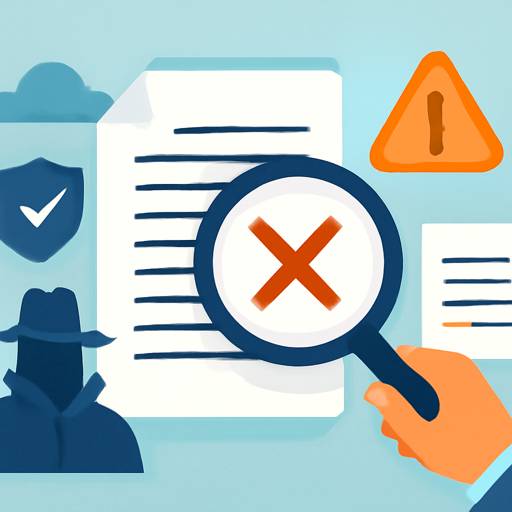
Machine learning models trained on large corpora of authentic and fraudulent documents can detect subtle statistical differences in texture, noise patterns, and color distributions that escape manual review. Deep neural nets enable anomaly detection in signatures and handwriting by comparing stroke dynamics when captured live. Liveness detection during capture—such as requiring a short video or multi-angle capture—adds another layer by ensuring the document is presented by a real person at the time of verification, preventing replay or static-image attacks.
Cryptographic methods also play a role: digital signatures, secure QR codes, and blockchain-backed provenance create tamper-evident chains that make post-issuance alteration detectable. For enterprise workflows, orchestration platforms correlate signals from identity databases, watchlists, and external verification services to validate details in real time. Well-tuned systems balance automation with human review to handle ambiguous cases, maintain audit trails, and support regulatory compliance. To explore a practical solution that combines many of these approaches, see document fraud detection.
Implementation strategies and real-world examples: reducing risk in critical workflows
Successful deployment of document fraud detection starts with mapping high-risk processes—account onboarding, high-value payments, access provisioning—and designing targeted checks. Financial institutions often layer identity verification, document scanning, and behavioral analytics at onboarding to prevent account takeover and synthetic identity creation. For example, a regional bank integrated multi-factor document checks and liveness capture into its remote account opening flow, reducing fraud-related chargebacks by over 40% within six months while also lowering manual review load.
Government agencies and border control units apply a mix of machine vision and human expert review to validate passports and visas. Automated detection flags tampered holograms or mismatched fonts, while specialist examiners handle the most complex cases. In supply chain and procurement, automated invoice validation combined with supplier credential verification catches forged invoices and vendor impersonation, preventing payment fraud and tightening internal controls.
Case studies also highlight the importance of feedback loops and continuous learning: flagged fraud samples and confirmed false positives should be fed back into detection models to improve accuracy. Cross-industry information sharing—threat intelligence feeds, shared blacklists, and consortium-based provenance registries—amplifies detection capabilities by surfacing emerging tactics quickly. Equally important are operational policies: clear escalation paths, privacy-preserving data handling, and regular training for staff who perform manual reviews. By pairing advanced technology with disciplined processes and ongoing adaptation, organizations can meaningfully reduce exposure to document-based fraud and stay ahead of adversaries who continue to innovate.

Lagos-born Tariq is a marine engineer turned travel vlogger. He decodes nautical engineering feats, tests productivity apps, shares Afrofusion playlists, and posts 2-minute drone recaps of every new city he lands in. Catch him chasing sunsets along any coastline with decent Wi-Fi.